How to Tell Someone How You Fight Before the First Fight
5 min read · Updated August 2026
I go cold in a fight, and people feel it before I speak. That is the sentence somebody should hear from me early, on a good night, instead of learning it at midnight three months in. Everyone has a worst self in a fight. The only honest thing you can offer a new person is not a promise. It is a description.
Why "I fight fair" tells them nothing
Ask anyone how they fight and you will get the same answer. Fair. Reasonable. 'I don't yell.' The claim is useless, and not because people are lying. It is useless because it is made in peacetime, by the calm version of a person, about a version neither of you has met yet.
Nobody is the villain of their own last argument. So a virtue claim — 'I fight fair' — carries no information the other person can use. What carries information is a failure mode. When a fight goes bad on you, which way do you go bad?
The usual answers fall into four shapes. You go cold and let them feel the temperature drop while you say nothing. You say the one thing you know will cut, chosen because it will cut. You withdraw and wait for them to hurt the way you do. Or you keep score — you hold a running ledger of their small debts and spend it later, weeks on, when they thought the account was closed. Everyone has all four in them. The order is what matters.
It also protects nothing. 'I fight fair' spends your credibility in advance. The first time you go cold or say the cutting thing, they do not just meet the behavior — they meet the gap between the claim and the behavior, and the gap is what feels like deceit.
Say which one is yours
So pick yours. Not the one that sounds most forgivable — the one that actually shows up first. If you need help, think of your last real fight and watch yourself in it. What did you do in the twenty minutes before it ended?
Then say it in a plain sentence, out loud, the way you would describe a scar. 'When I lose a fight, I go quiet and the room goes cold with me. You will feel it before I explain it.' That is speakable. It takes ten seconds.
Here is what the description buys you. The behavior is going to surface eventually, because you are describing what you do, not what you fear you might do. When it surfaces, it lands as something you disclosed, not something you hid. They can say 'this is the thing you told me about' instead of 'where did this come from.' Those are two very different fights.
A named behavior can be asked about, interrupted, even forgiven quickly, because it has edges. An unnamed one just reads as the real you finally emerging. Same act. Different story. You get to pick which story they are holding when it happens.
A description is not a permission slip. Naming the cold does not make the cold fine. It makes it legible — the other person can see it start, call it what it is, and ask for the repair while the fight is still small. That is the whole trade: they get early warning, you get a fight that can still end well.
Have it on a calm night, not a bruised one
Timing decides what the sentence means. Say it inside an actual argument and it is a threat or a defense. Say it the morning after one and it is an apology wearing a costume. Both of those are about the fight you just had. This conversation is about every fight you have not had yet.
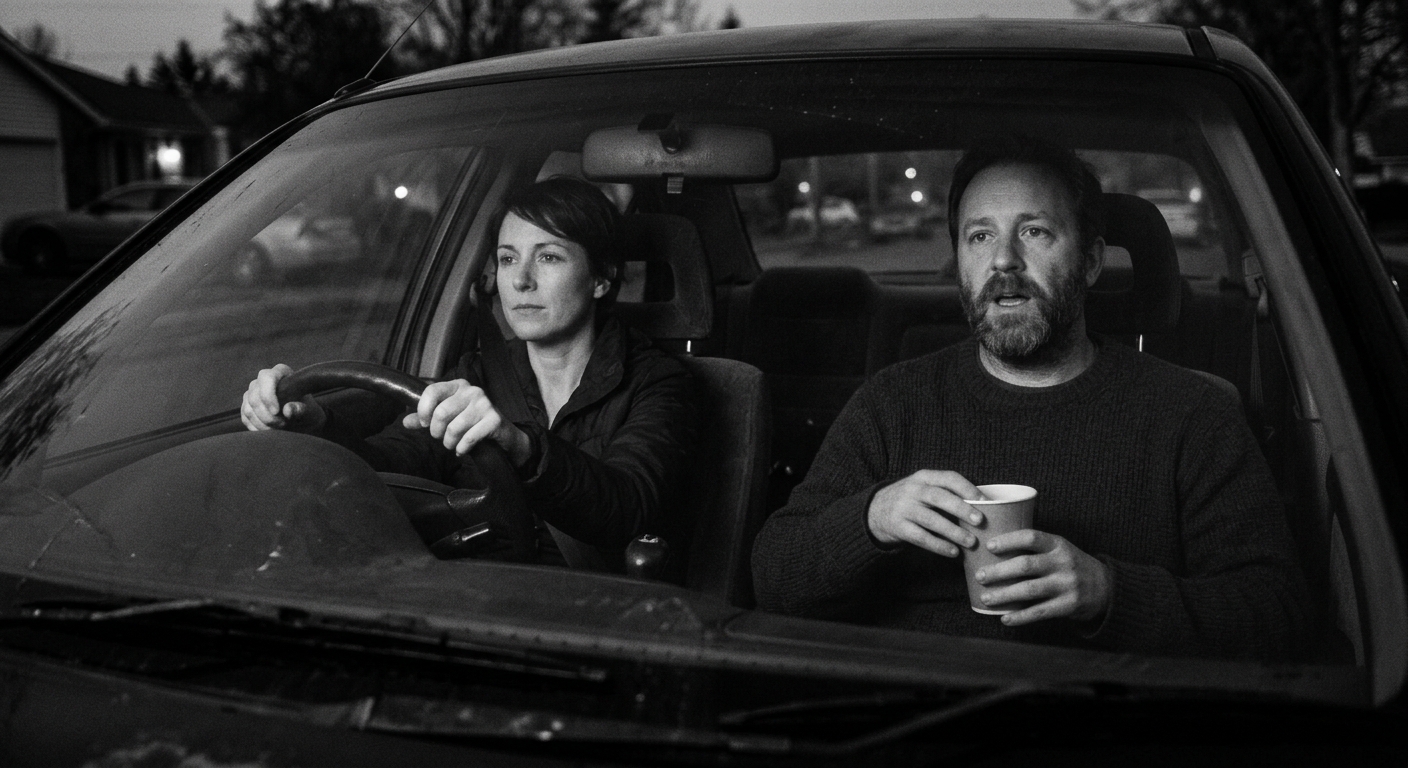
Pick a neutral stretch: a walk, a drive, cooking something that does not need much attention. Side-by-side helps — it is easier to describe your worst self to a windshield than across a table. Keep it short. One minute of description, then hand it over: 'What is yours?' If you cannot get through the calm version without defending yourself, you are not ready. Wait a week.
Their answer is a conversation, not a grade
When they tell you theirs, the job is not to weigh it against yours. There is no good answer to this question. Cold is not better than cutting. Keeping score is not more honest than withdrawing. You are not holding auditions for a worst self.
Ask follow-ups instead. What does it look like from the outside? What makes it worse? What, if anything, helps it stop? Their answers tell you what a fight between the two of you will actually look like — the cold one paired with the one who needs words, the cutter paired with the one who remembers everything. That is not a verdict on the match. It is a map of the weather you two will make together.
Most people never say any of this, because naming your worst move feels like handing over ammunition. It can be used against you, sure. But a person who would weaponize your honesty was going to find the ammunition anyway. Disclosure does not arm them. It just means you both know where the sharp edges are.
And if their worst self sounds hard to live with, that is not a grade either. It is information you would have gotten anyway, later, at a worse time. You just got it early, cheap, and in words.
This is why one of the fourteen questions in the MOU asks you to rank your worst self in a fight — the cold one, the cutting one, the withdrawn one, the one that keeps score — most like you at the top. You both answer it privately, before the date, when there is nothing to win and nobody to convince. Then you compare. The ugly sentence stops being a risk one of you takes alone. It becomes an answer you both already gave.