How to Tell Someone the Way You Fight Before They See It
8 min read · Updated August 2026
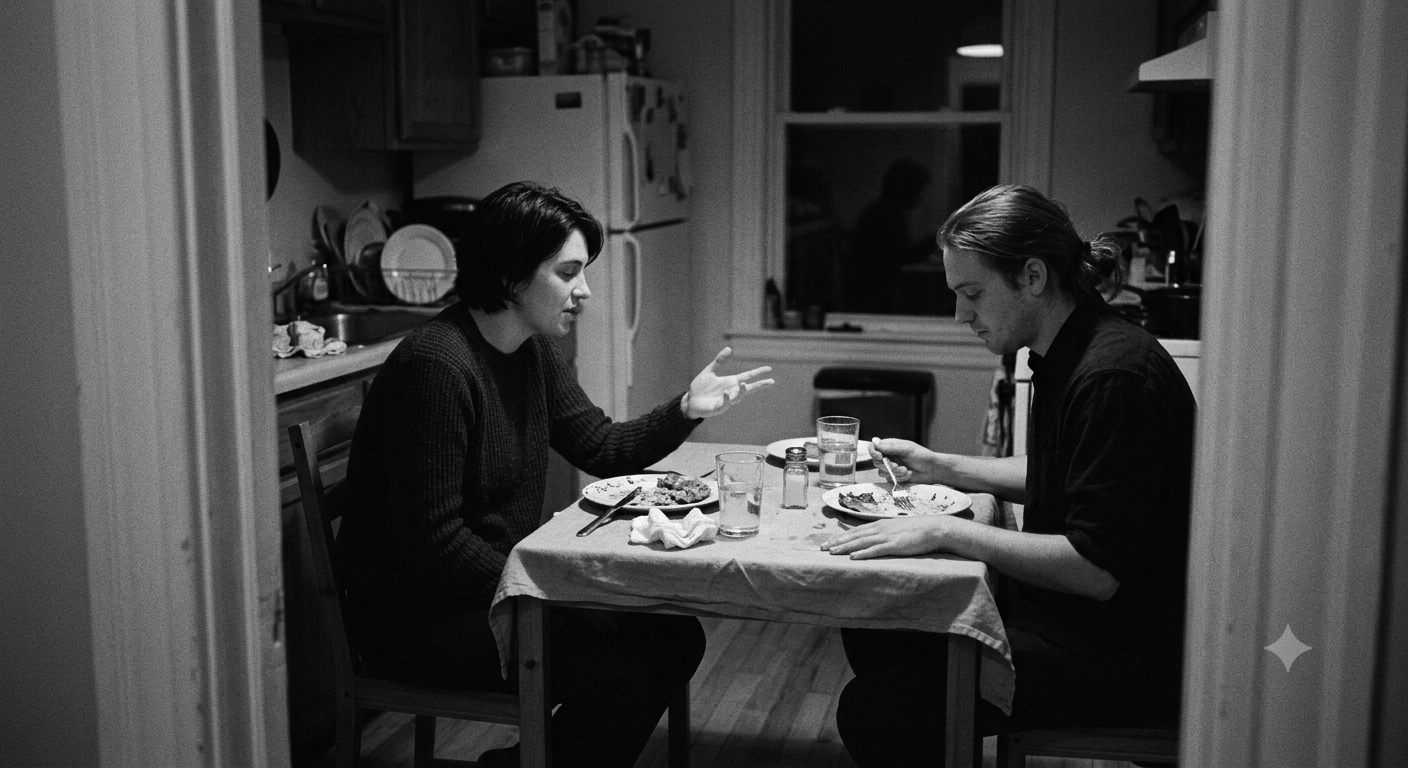
The first real fight is not where someone learns who you are. It is where they learn what you do when you are losing. You can hand them that information early, in a calm voice, over a Tuesday dinner — or you can let them find it at eleven at night when you have already gone cold and they are still talking.
Most people treat the way they fight as a thing that gets discovered rather than a thing that gets disclosed. It comes out under load. By then it has no context. Your silence looks like contempt instead of the thing you learned to do at fourteen when the alternative was saying something you could not take back. Their raised voice looks like danger instead of the way their family has always talked about the dishwasher.
There is a cheaper route. You say it before it happens, in the flattest voice you own, with no apology attached. Not a warning label. Instructions.
Why you say this before the first real fight, not after
During an argument, nothing you say about yourself is credible. If you go quiet and then explain, mid-fight, that going quiet is just what you do, it lands as a defense. You are asking for a pass on the exact behavior currently hurting them. Even if every word is true, the timing makes it a maneuver.
After the fight is better, and it is still late. By then the other person has built a private theory about what happened, and your explanation has to fight that theory. People do not give up their first read easily. They filed something away. You are now arguing about the file.
Before is the only window where the same sentence costs you nothing. Nobody is hurt. Nobody is defending anything. "When I get cornered in an argument, I go cold and stop talking" is a piece of information, the way telling someone you cannot eat shellfish is a piece of information. It sits in the room, gets acknowledged, and waits.
And it does real work later. The first time it happens, the other person has a thought available to them that they would not otherwise have: this is the thing he told me about. That single thought is the difference between an argument about the dishwasher and an argument about whether you respect them. It does not make the cold less cold. It makes the cold legible, and legible things end faster.
The four ways people go bad, and why the order matters more than the list
When people go to their worst in a fight, most of it falls into four moves. You go cold, and you make sure they can feel the temperature drop. You say the one thing you know will cut, because you have been paying attention and you know where the soft part is. You withdraw and wait, because you want them to sit in the same hurt you are in. Or you say nothing, keep score, and spend it three weeks later in an argument about something else entirely.
Everyone has all four. Anyone who claims only one of these is available to them has not been in a long enough relationship, or has not been paying attention to themselves. On a bad night with the wrong person about the wrong thing, all four are within reach.
What actually distinguishes people is the order. Which one comes first, reliably, when you are tired and losing and want the conversation to stop. That is the one your partner will meet in year one. The others are further down the shelf and they may never come up at all.
So the useful disclosure is not "I have a temper" or "I can be difficult." It is: here is my first move. Mine is the cold one. Or: mine is the cutting one, and it is fast, and I will regret it within the hour. Or: mine is the scoreboard, and you will not know I am keeping one until I read it out to you.
Naming your first move also tells them what your recovery looks like. The person who goes cold usually needs twenty minutes and a closed door before they can be reasonable. The person who cuts usually needs to apologize immediately and specifically, and needs the other person to let them. The person who withdraws to make a point often needs to be asked one direct question. These are not the same repair, and guessing wrong makes it worse.
Say what you do, not what you are
The version of this conversation that goes badly is the one where you describe your character. "I am a cold person." "I am bad at conflict." "I have issues with confrontation." All of that is unfalsifiable and all of it invites reassurance, which is the opposite of what you want. The other person's only available response is to tell you that you are not so bad. Now you are being comforted instead of understood.
Describe behavior at the level of a camera. What would somebody watching from the kitchen doorway see. "I stop answering." "I go somewhere else in the house." "I bring up something from a month ago." "My voice gets very even and very quiet and it is worse than shouting." These are checkable. They give the other person something to recognize rather than something to accept on faith.
Keep the diagnosis out of it. You do not need to explain where the cold came from, or what your father did, or what a previous partner said about you at the end. That material is real and it belongs to a later month. Offered too early, it converts a piece of practical information into a request for sympathy, and it makes the other person feel they have been handed something they cannot put down.
Do not perform contrition either. If you say your worst move with heavy shame on it, they will spend the conversation managing your shame. Say it the way you would name a scar. This happened, here is where it is, it does not need attending to right now.
And do not promise it away. "I used to do that but I do not anymore" is a claim you cannot back at week three, and it makes the eventual first occurrence into a broken promise instead of an expected event. Say what you do. Say what helps. Stop.
What to do when their worst self is the one that lands hardest on you
You go first, and then they answer, and sometimes the answer is the exact thing you cannot take. You are someone who needs speech to feel safe, and they tell you their first move is to leave the room for a day. Or you grew up in a house where nobody raised their voice, and they tell you they say the cutting thing and then take it back an hour later.
The temptation is to smooth it over in the moment. Nod, say that sounds manageable, and privately decide you will handle it when it happens. Do not do that. The whole value of this conversation is that it is happening while both of you are calm, which means it is the cheapest possible time to say something true.
So say it plainly. "That one is hard for me. When someone goes quiet for a day I assume it is over." You are not asking them to change their first move. You are telling them what their first move costs on your end, which is information they cannot get any other way.
Then get concrete about the smallest possible accommodation. Not a personality change — a sentence, or a time limit. Some version of: if you need to leave the room, tell me you are coming back. If you say the cutting thing, take it back the same night, not the next morning. Small mechanics like this survive contact with an actual argument. Grand resolutions do not.
A mismatch here is not a verdict on the two of you. Plenty of durable couples are built out of one person who needs to talk immediately and one person who needs an hour. What makes it work is that both of them know it in advance and have a script. What makes it fail is discovering it at midnight and each concluding the other is doing it on purpose.
Handing it back: what to ask once you have gone first
Going first buys you the right to ask, but only if you ask well. "So what are you like in a fight?" gets you a résumé answer. Everybody thinks they are fair, direct, and quick to apologize. Nobody's self-report of their own conflict style survives an actual fight.
Ask for the order instead. "Of those four, which one is at the top for you?" is a question with a real answer, because you have already narrowed the field and already admitted your own. It is much harder to give a flattering non-answer to a multiple-choice question than to an open one.
Then ask the second question, which is the one that actually helps: what do you need from me when you are in it. Not what would be ideal. What has worked. Most people have some idea, even if nobody has ever asked them. Some need to be left alone for a fixed period. Some need one direct question. Some need to be told the relationship is not currently in danger, out loud, in those words.
Write nothing down. You will remember. The point of this conversation is not a contract. It is that when the first real fight arrives — and it will, over logistics, probably, and probably sooner than you expect — neither of you is meeting a stranger.
This is a hard conversation to start cold over dinner, which is why the MOU asks it directly. One of the fourteen questions puts the four moves in front of you and asks you to rank them, most like you at the top — everyone has all four, so the order is the answer. You both answer it privately before the date, and then you compare. Nobody has to find the words for their worst self while looking someone in the eye for the first time. It is already on the page, in order, next to theirs.